


Singapore
Motion Graphics Agency
Greater Brand’s awareness that leads to conversion through motion graphics
From brand mascot, moving images, to expressive texts; motion graphics and animation involve the entire creative and design discipline. Motion graphics has been widely used to create visual narratives in explaining a difficult, abstract concept, and to the extent of creating a strong statement or impression that is highly memorable.
Beyond digital screens and beautiful visuals, motion graphics is a special visual language that can be translated into various mediums, allowing high-end brands maintaining their image as well as engaging your customers.
Table of Content
-
Definition of Motion Graphic
Importance in modern marketing
-
2D Animation
3D Animation
Typography in Motion
Infographics and Data Visualization
Logo Animation
-
Script and Planning
Design
Planning
-
Enhancing Brand Identity
Creating Brand Consistency Across Platforms
-
Keeping it Simple and Focused
Ensuring Accessibility
Optimizing for Different Platforms and Devices
Maintaining Brand Consistency
-
Engagement Metrics
Conversion Metrics
Brand Awareness Metrics
.Platform-Specific Metrics
Long-term Impact Metrics
-
Successful Motion Graphics
1.Introduction
Motion graphics is a form of digital animation that combines graphic design elements with movement, usually accompanied by audio.
It's a versatile medium that blends various design disciplines, including:
Graphic design
Animation
Illustration
Typography
Video production
Motion graphics typically involve the creation of animated visual content using software tools like Adobe After Effects, Cinema 4D, or Blender.
These graphics can range from simple animated logos to complex infographics, title sequences, or full-scale video productions.
Key characteristics of motion graphics include:
Dynamic movement of visual elements
Integration of text and imagery
Use of colour, shape, and form to convey information
Synchronisation with audio (music, voice-over, or sound effects)
Importance in modern marketing
Motion graphics have become increasingly crucial in today's fast-paced, visually-driven digital landscape. Their importance in modern marketing and branding can be attributed to several factors:
a) Attention-grabbing: In an era of information overload, motion graphics can quickly capture and retain audience attention, making them ideal for social media, websites, and digital advertising.
b) Enhanced storytelling: Motion graphics allow brands to convey complex ideas or narratives in a concise, engaging manner, often in just a few seconds.
c) Improved information retention: Animated content is often more memorable than static images or text alone, helping audiences better retain key messages or data.
d) Brand differentiation: Unique motion graphic styles can help a brand stand out in a crowded marketplace and create a distinctive visual identity.
e) Versatility: Motion graphics can be adapted for various platforms and purposes, from TV commercials to social media posts, making them a cost-effective marketing tool.
f) Emotional impact: The combination of visuals, movement, and sound in motion graphics can evoke stronger emotional responses than static content, helping to build deeper connections with audiences.
g) Simplified explanation of complex concepts: Motion graphics excel at breaking down intricate ideas or processes into easily digestible visual narratives.
h) Mobile-friendly content: With the rise of mobile device usage, short-form animated content is particularly well-suited for on-the-go consumption.
i) SEO benefits: Video content, including motion graphics, can improve website engagement metrics and potentially boost search engine rankings.
2. Types of Motion Graphics
Each of these types of motion graphics offers unique advantages and can be applied in various marketing contexts.
Effective marketers often combine multiple types of motion graphics in their campaigns to create a rich, engaging visual experience that reinforces their brand message and captures audience attention across different touchpoints.
The choice of which type to use depends on factors such as the message to be conveyed, the target audience, the brand identity, and the platform where the content will be displayed. You might study deeper the choices of motion graphic below:
2D Animation
Definition: Two-dimensional animation created in a flat, vector-based environment.
Characteristics:
Simplicity and clarity
Often faster and less resource-intensive to produce than 3D
Can range from basic to highly complex designs
Application in marketing:
Explainer videos
Social media content
Animated infographics
Popular styles:
Flat design
Isometric design
Character animation
3D Animation
Definition: Three-dimensional animation that adds depth and perspective to motion graphics.
Characteristics:
More realistic and immersive
Can be more complex and time-consuming to produce
Allows for dynamic camera movements and lighting effects
Application in marketing:
Product demonstrations
Virtual tours
High-end brand videos
Techniques:
3D modelling
Texturing and lighting
Rigging and animation
Typography in Motion
Definition: The art of animating text to convey meaning and emotion.
Characteristics:
Focuses on the movement and transformation of letters and words
Can be combined with other graphic elements
Highly effective for emphasizing key messages
Application in marketing:
Title sequences
Lyric videos
Animated quotes for social media
Techniques:
Kinetic typography
Morphing text
Synchronized text animation with audio
Infographics and Data Visualization
Definition: The representation of data or information through animated graphics.
Characteristics:
Simplifies complex information
Engages viewers through visual storytelling
Can handle large amounts of data in a digestible format
Application in marketing:
Annual reports
Industry trend analysis
Product comparisons
Types:
Animated charts and graphs
Interactive data visualizations
Timelined infographics
Logo Animation
Definition: Bringing a static logo to life through movement and transformation.
Characteristics:
Reinforces brand identity
Creates a memorable impression
Can be adapted for various media
Application in marketing:
Reinforces brand identity
Creates a memorable impression
Can be adapted for various media
Types:
Reveal animations
Looping animations
Responsive logo animations
3. Our Creative Process in Producing Motions Graphics Video
Script and Planning
Your store begins here. We start with a deep dive into your brand’s heart, crafting a narrative that speaks volumes, laying the foundation for a script that captures your essence and ambitions. We then brainstorm and collaboratively shape high-level concepts for your motion graphics, alongside choosing the right art direction, ensuring the message is tailored to resonate with your audience and objectives.
Design
With the script as our compass, we explore the visual realms, presenting various motion graphics styles that define your narrative. Our artists then sketch your story, frame by frame, awaiting your touch to bring it to life.
Animation
The magic unfolds as we weave together the narrative and artistry, enhance each scene with professional voice-overs, royalty-free music, and sound effects, culminating in a motion graphic masterpiece that embodies your brand.
4. Motion Graphics in Branding
Motion graphics allow brands to tell their stories more effectively, adapt to various digital environments, and create memorable experiences that resonate with their audience. The key is to use motion thoughtfully and strategically, always in service of the brand's core identity and communication goals.
Let’s look at the steps for branding with animations:
A. Enhancing Brand Identity
1. Visual Storytelling:
Using motion to narrate the brand's story, values, and mission
Creating emotional connections through dynamic visuals
Example: Animated infographics showcasing a company's history or impact
2. Personality Expression:
Translating brand personality traits into motion characteristics
Playful brands might use bouncy animations, while luxury brands may opt for smooth, elegant movements
Incorporating brand-specific gestures or movements that become recognizable
3. Memorability:
Creating unique motion signatures that stick in viewers' minds
Developing animated mascots or characters associated with the brand
Using repetitive motion patterns that become associated with the brand over time
4. Modernization:
Updating traditional brand elements with contemporary motion design
Breathing new life into established brands through subtle animations
Demonstrating innovation and adaptability through cutting-edge motion techniques
5. Brand Architecture Visualization:
Using motion to illustrate relationships between parent brands and sub-brands
Animating transitions between different product lines or services
Creating dynamic org charts or brand hierarchies for internal communications
B. Creating Brand Consistency Across Platforms
1. Motion Style Guides:
Developing comprehensive guidelines for how brand elements should move
Specifying timing, easing, and other animation parameters
Creating a library of pre-approved motion assets for different contexts
2. Responsive Motion Design:
Adapting animations for various screen sizes and orientations
Ensuring consistent brand experience from desktop to mobile
Creating scalable vector animations that maintain quality across resolutions
3. Cross-Platform Asset Management:
Developing a centralised repository of motion graphic assets
Ensuring easy access and distribution of up-to-date brand animations
Implementing version control to maintain consistency as brand evolves
4. Platform-Specific Optimizations:
Tailoring animations to suit different social media platform requirements
Adapting motion graphics for various video aspect ratios (16:9, 9:16, 1:1)
Considering load times and performance across different devices
5. Brand Training and Education:
Creating motion graphic tutorials for internal teams on brand usage
Developing animated brand guidelines for easy comprehension
Using motion graphics to onboard new employees to brand standards
5. Best Practices for Motion Graphics
Brand marketers can create motion graphics that are not only visually appealing and effective but also accessible, adaptable, and consistently on-brand. The key is to approach motion graphic design strategically, always keeping the audience and brand objectives in mind while navigating the technical and creative aspects of the medium. Here is the breakdown:
A. Keeping it Simple and Focused
1. Clarity of Message:
Identify one core message per animation or scene
Use a clear hierarchy of information to guide viewer attention
Employ the "5-second rule": convey the main idea within the first 5 seconds
2. Visual Simplification:
Minimize decorative elements that don't contribute to the message
Use negative space effectively to prevent visual clutter
Employ the "5-second rule": convey the main idea within the first 5 seconds
3. Content Pacing:
Break complex ideas into digestible chunks
Use progressive reveal techniques to introduce information gradually
Allow pauses for important points to sink in
4. Storytelling Structure:
Implement a clear beginning, middle, and end in your animations
Use a problem-solution narrative structure when applicable
Create emotional hooks to engage viewers from the start
3. Focused Call-to-Action:
Include only one primary CTA per motion graphic
Make the CTA stand out visually and conceptually
Ensure the CTA is relevant to the content and easily actionable
B. Ensuring Accessibility
1. Visual Considerations:
Maintain high contrast ratios (at least 4.5:1 for normal text, 3:1 for large text)
Avoid relying solely on colour to convey information
Use easily readable fonts at appropriate sizes (minimum 16px for body text)
Implement alt text for complex visuals in web-based motion graphics
2. Audio Accessibility:
Include closed captions or subtitles for all spoken content
Provide transcripts for audio-heavy motion graphics
Ensure sound effects have visual counterparts when crucial to understanding
3. Motion and Timing:
Avoid rapid flashing or strobing effects (no more than 3 flashes per second)
Provide options to pause, stop, or hide animated content
Allow sufficient time for viewers to read text (general rule: 0.3 seconds per word)
4. Cognitive Accessibility:
Use plain language and avoid jargon
Provide clear navigation cues in interactive motion graphics
Offer alternative static versions of key information
5. Inclusive Design:
Consider diverse representations in character designs and illustrations
Test motion graphics with users who have various accessibility needs
Stay updated on WCAG (Web Content Accessibility Guidelines) standards
C. Optimizing for Different Platforms and Devices
Format Adaptability:
Create multiple aspect ratios: 16:9 (landscape), 9:16 (vertical), 1:1 (square)
Design with a "mobile-first" mindset, then scale up for larger screens
Use responsive design principles in web-based motion graphics
Platform-Specific Optimization:
Adhere to platform guidelines (e.g., Instagram's 60-second limit for feed videos)
Optimize for autoplay scenarios on social media
Leverage platform-specific features (e.g., Twitter's GIF support)
Performance Considerations:
Compress files appropriately for web and mobile viewing
Use efficient codecs like H.264 for video and SVG for scalable animations
Implement lazy loading for web-based motion graphics
Adaptive Content:
Create modular animations that can be easily rearranged or shortened
Design text elements that resize automatically based on screen size
Use breakpoints to adjust complexity of animations for different devices
Cross-Platform Testing:
Test on various devices and operating systems
Use browser developer tools to simulate different screen sizes and connections
Conduct user testing across different platforms to ensure consistent experience
D. Maintaining Brand Consistency
Visual Branding:
Strictly adhere to brand colour palettes and typography
Maintain consistent use of logos and other brand elements
Develop a library of on-brand icons and illustrations for repeated use
Motion Language:
Create a set of branded animation presets (e.g., specific easing curves)
Develop signature transitions that become associated with your brand
Establish guidelines for the speed and style of animations
Tone and Personality:
Align motion characteristics with brand personality (e.g., playful, professional)
Maintain consistent voiceover style and music choices
Ensure messaging and humour are on-brand across all motion graphics
Template Development:
Create reusable motion graphic templates for common content types
Develop a modular system of animated elements for easy assembly
Establish guidelines for customising templates while maintaining consistency
Brand Evolution:
Plan for how motion graphics will evolve with brand updates
Create flexible systems that can accommodate minor brand tweaks
Document all motion graphic standards for easy reference and updates
Quality Control:
Implement a robust review process to ensure brand consistency
Use checklists to verify adherence to brand guidelines
Conduct regular audits of published motion graphics across all platforms
Team Alignment:
Provide comprehensive training on motion graphic brand standards
Create easily accessible documentation of motion graphic guidelines
Foster collaboration between brand managers and motion graphic designers
6. Measuring the Impact of Motion Graphics
By implementing a robust measurement strategy that encompasses the KPIs below, brand marketers can gain valuable insights into the performance of their motion graphics. This data-driven approach allows for continuous optimization, ensuring that motion graphics not only capture attention but also drive meaningful business results.
Key Performance Indicators (KPIs)
Engagement Metrics:
View Count: Total number of views
Watch Time: Average duration viewers spend watching
Completion Rate: Percentage of viewers who watch the entire video
Engagement Rate: Likes, comments, shares as a percentage of views
Click-Through Rate (CTR): Percentage of viewers who click on a CTA
Conversion Metrics:
Lead Generation: Number of leads attributed to the motion graphic
Conversion Rate: Percentage of viewers who complete a desired action
Cost Per Acquisition (CPA): Cost of acquiring a customer through the motion graphic
Return on Investment (ROI): Revenue generated compared to the cost of production
Brand Awareness Metrics:
Brand Recall: Surveys to measure how well viewers remember the brand
Brand Lift: Increase in brand searches or mentions after campaign launch
Sentiment Analysis: Positive, negative, or neutral reactions in comments
Platform-Specific Metrics:
Social Media: Follower growth, reach, impressions
Website: Time on page, bounce rate for pages with motion graphics
Email: Open rates, click rates for emails containing motion graphics
Long-term Impact Metrics:
Customer Lifetime Value (CLV): Impact on long-term customer relationships
Brand Equity: Changes in overall brand perception and value
Market Share: Shifts in market position attributable to motion graphic campaigns
7. Case Studies
Some of our recent Motion Graphics work

-
Art Director
Jerly is a highly skilled Lighting Technical Director with over 13 years of experience in Visual Effects. His career has flourished in esteemed studios such as Industrial Light & Magic (Lucasfilm), DNEG, and MPC, including a significant two-year tenure in the UK. Jerly has played a pivotal role in creating stunning visuals for Hollywood hits like Jurassic World, Transformers, and Mission Impossible. Known for his expertise in 3D lighting and narrative enhancement, he is dedicated to pushing the limits of creativity and technical excellence in Visual Effects.
Meet The Core Team
We are all creatives in our own field and expertise to help produce your brand’s story in the most authentic way.

-
Managing Director / Founder
I’m a creative professional that specializes in digital 2d, 3d animation and motion graphics. We haven’t met yet, but let's connect if you are:
- A marketer, brand manager who is looking to hire a creative angle for storytelling, animation, motion graphics, I work with many people like you.
- A marketer, brand manager who is looking to bridge communication gaps when entering a new market in the region, specifically in the Asia Pacific market in the form of brand playbook, sales kit and brand videos.
- An executive producer or creative director of an agency who is looking for a content production partner or cross-expertise.
If any of the above sounds like you, I work a lot with people like you.
I’ve spent most of my entire career in the space of animation, motion design and interactive content.
Click here to view my career highlights on LinkedIn. Let’s connect!

-
Creative Producer
For the past 12 years in digital animation and production, I love to be working alongside clients in meeting their key metrics creatively, ensuring we have the specialised talents to work on each specific project. I believe that creativity and effective project management go hand in hand in order to achieve the results that are on-brand and high quality.
I have enjoyed working on various diverse creative animated projects for clients like Mandai Wildlife Reserve, NHG, SGX, Simmons and Lazada.
Who we work with
We work with forward-thinking brands to connect with you and shape the world around us.
What They Are Saying
-
Thank you for putting us in the right direction from the start of planning to the execution of the project.
-
Great work within many constraints within the project. The team puts in a lot of thought in the discovery phase, taking the initiative to tell us what would and wouldn’t work for our campaign.
-
Quality work and going the extra mile to understand what we are looking for despite the tight deadlines; it saved us a lot of time during the creative process.
Some call us Video Production
or Animation Company
But at the heart of it, we are visual storytellers who work closely with people
and brands we believe in.
Be it 3D animation or other video production methods, what keeps us going is to create content that not only looks great, but also to co-create with you in order to deliver meaningful results for your investment.
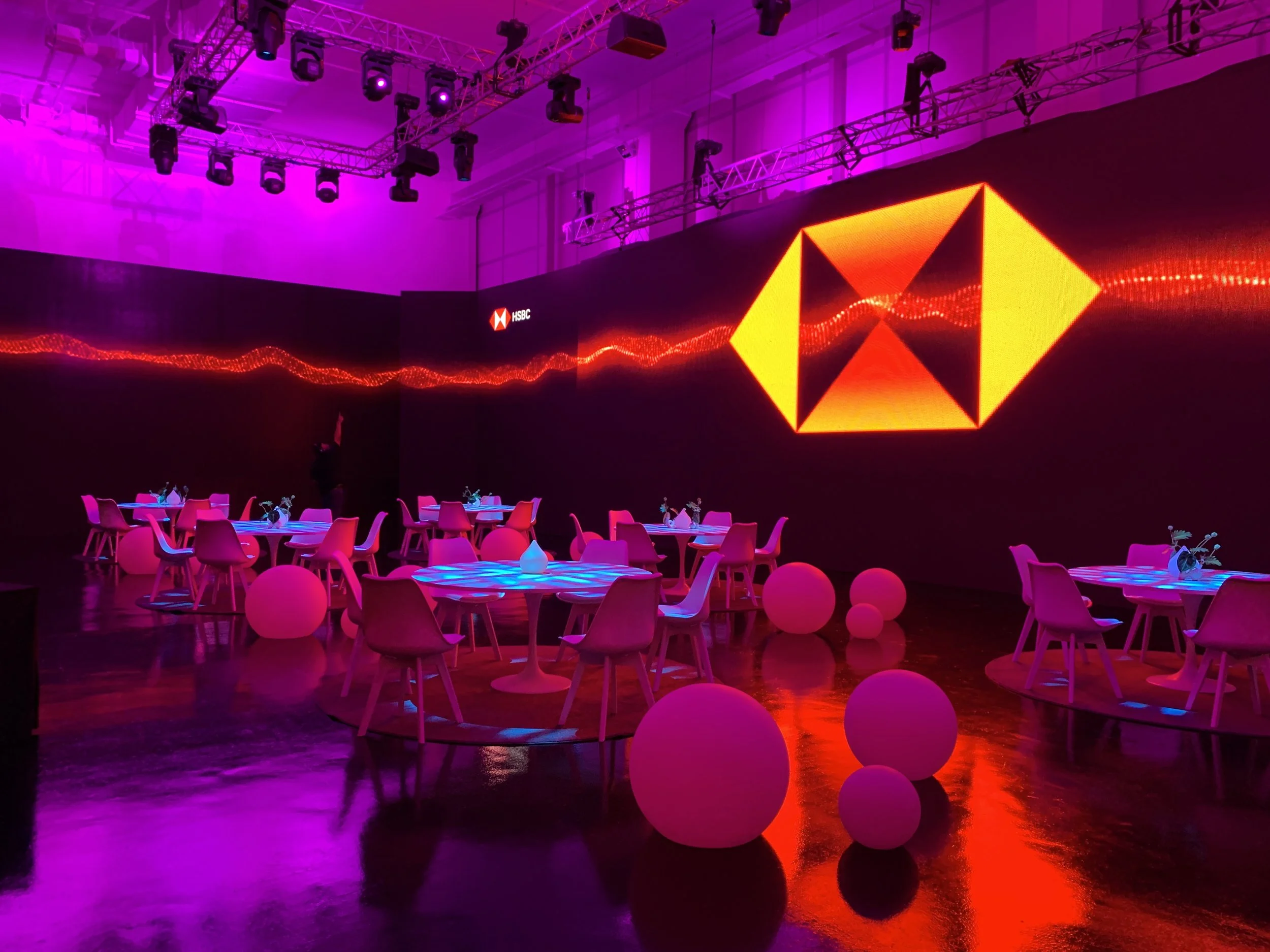
HSBC Global Private Banking Immersive Dinner

National University of Singapore Brand Video
-
From creating brand mascot, expressive texts, motion design and animation encapsulate the entire motion graphics discipline. We work with experienced, senior designers in each of the discipline to expand our creative services to supplement the team on larger-scale projects.
As such, we are able to offer clients our full range of design-driven solutions from small to larger scale projects. This too allows us to pivot easily if the needs change, which is critical in today's marketing strategies.
-
Your brand awareness starts with how you position your brand and marketing campaign identity. More than just animated content and key visual for your social media, it deserves an identity that sets you apart from the competition.
If you are managing your marketing and brand's presence specifically in Asia Pacific region, we will be your creative partner ensuring story and visuals that will connect and relate with your target market.
-
When it comes to your your business, audience, industry and brand, you know them the most.
We will be your partner in translating your words and vision into visual narrative that connects and creates an impression with your target audience.
You will be working closely with our creative director and account manager at every stage to ensure we deliver a brand video that everyone will be proud of.
-
You are looking for a greater online presence to drive interaction and enhance your brand's visibility. Connect with your audience to inspire action and let us work closely with you to create content that not only stands out in the feed, but also creates a lasting impression for your brand.
A bespoke content in animation or illustrations could be a powerful and versatile tool for your engagement and growth.
-
2D Animation will bring a different flair to brands that are looking to communicate in a certain way. This could include characters, texts, creatures and background that are moving in a two dimensional space.
Very much so like 3D, it has a different appeal to audience when it's done right.
Frequently Asked Questions About Motion Graphics Studios in Singapore
-
Motion graphics can transform complex information into engaging, easily digestible visual content. They enhance storytelling, capture audience attention, and can effectively convey your brand's message. Additionally, motion graphics are versatile and can be used across various digital platforms, from websites to social media, increasing your content's appeal and engagement and strengthening your brand presence and communication effectiveness. View our motion graphics portfolio to see how our clients achieved their business goals.
-
Yes, Elevate can create Motion Graphics for VR (Virtual Reality) and AR (Augmented Reality) applications. Our expertise spans various digital mediums, enabling us to design engaging motion graphics for immersive VR and interactive AR experiences. This capability allows us to produce captivating and interactive content, enhancing the user experience in immersive digital environments. To enquire about an upcoming project you have in mind, reach out to us at hello@elevatefuture.com.
-
Motion graphics projects may vary in timeline and duration. Simple projects may take a few days to two weeks, while moderately complex projects often require 2 to 4 weeks. For highly detailed or intricate motion graphics applications, the timeline can extend to 1-2 months or more. Timelines are influenced by the project's complexity and specific requirements and may vary based on the production house's workflow. To get an estimate for a project you have in mind, enquire with us at hello@elevatefuture.com.
-
At Elevate, client involvement in the motion graphics process is highly encouraged. We adopt a collaborative approach as we delve into understanding your business goals and vision. This ensures that clients can actively provide input and feedback throughout the creation process, from the initial concept phase to the final product, guaranteeing that the end result of the motion graphics aligns precisely with your objectives and expectations.
-
Elevate offers revisions and edits on motion graphics projects. Our policy ensures that the final product aligns with your vision and objectives. We typically provide 2-3 rounds of revisions, allowing adjustments based on your feedback to achieve your marketing goals effectively. For more specific details on our revision policy or to discuss your project's needs, contact us at hello@elevatefuture.com.
-
The pricing for our motion graphics services varies depending on the complexity of the project. Basic motion graphics can start from as low as $1,000 for projects with simpler requirements. For more detailed projects, especially those integrated with live footage, costs can exceed $20,000. Each project is assessed individually to provide an accurate quote based on the specific needs and intricacies. For a detailed estimate tailored to your project, reach out to us at hello@elevatefuture.com.